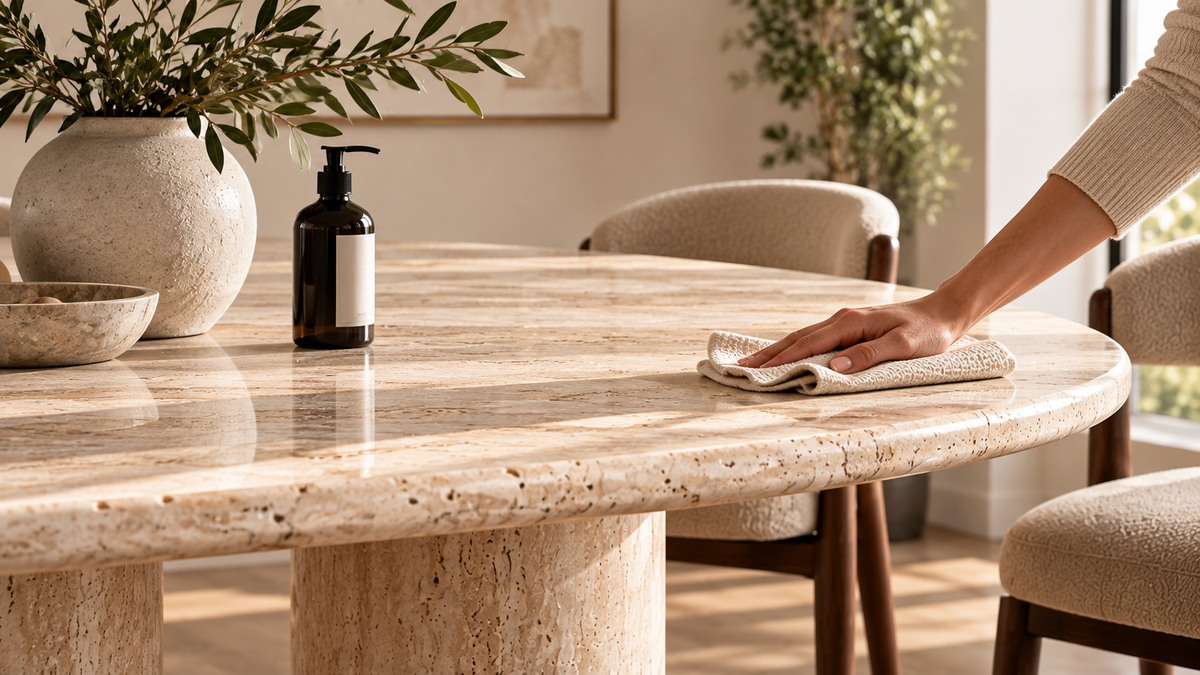
A travertine dining table can be used every day, but it should not be cleaned in the same way as glass, laminate or engineered surfaces. Travertine is a natural stone with a porous structure, and its surface requires appropriate care to maintain its appearance and integrity over time.
This guide explains how to clean a travertine dining table, how to respond to spills and stains, and what to avoid.
Understanding Travertine Before You Clean It
Travertine is formed from mineral deposits and has a layered, porous structure. Its surface can absorb liquids if unprotected, and acidic substances can etch the stone even where a protective treatment has been applied.
The finish your table has received affects how it should be cleaned. A polished surface and an unpolished surface may require slightly different products. The protective treatment applied during or after manufacture also affects the correct maintenance approach. Follow any care instructions provided with your table.
Daily Cleaning
For everyday cleaning, use a soft cloth or a damp cloth with warm water. Wipe the surface gently and dry it immediately. Moisture left standing on the surface is not recommended.
Do not use kitchen spray cleaners, washing-up liquid, or general household surface products on travertine. Many of these contain chemicals that are too harsh for natural stone and may cause surface damage over time.
Use a cleaner confirmed as suitable for natural stone if you want to use a product beyond plain water. Stone-specific cleaners are available from specialist retailers and are formulated to clean the surface without affecting its finish or protective treatment.
How to Deal with Spills
Remove spills as quickly as possible. The longer a liquid sits on the surface, the greater the risk of absorption or staining.
Blot the spill with a clean, soft cloth rather than wiping it. Wiping spreads the liquid across a larger area. Blotting lifts it from the surface without expanding the affected zone.
Once the liquid has been removed, wipe the area with a damp cloth and dry it thoroughly.
Substances That Require Immediate Attention
Some substances pose a higher risk to travertine than others. These should be removed immediately rather than left to dry.
- Red wine and other coloured drinks
- Coffee and tea
- Citrus juice and fruit
- Vinegar and vinegar-based dressings
- Tomato sauce and ketchup
- Mustard
- Olive oil and cooking oils
- Candle wax
Acidic substances in particular can etch the surface, leaving a dull or rough mark. This can occur even through a sealed surface if the acid is strong enough or left in contact for too long.
What Not to Use on a Travertine Table
The following should not be used on a travertine dining table under any circumstances.
- Bleach or bleach-based cleaners
- Vinegar or vinegar-based cleaners
- Lemon juice or citrus-based cleaning products
- Abrasive cloths, scouring pads or steel wool
- Harsh kitchen sprays or bathroom cleaners
- Products not confirmed as safe for natural stone
These substances can etch, stain or permanently damage the stone surface and may remove or degrade any protective treatment that has been applied.
Using Coasters and Place Mats
Coasters beneath drinks glasses, cups and bottles are a practical measure. They prevent condensation rings and reduce the direct contact of liquids with the stone surface.
Place mats beneath plates, serving dishes and decorative items reduce the risk of scratching and protect the surface from heat. Stone is generally resistant to heat, but the underside of ceramic dishes and decorative objects can still cause surface marks.
Preventing Scratches
Travertine can be scratched by sharp or rough objects. Do not slide ceramic plates, glasses, metal items or decorative pieces across the table surface.
If you regularly place centrepiece items on the table, use a felt pad or protective mat beneath them to avoid gradual surface marking.
Sealing a Travertine Dining Table
Many travertine tables are supplied with a protective surface treatment already applied. This treatment reduces the stone's porosity and helps to limit the penetration of liquids and staining agents.
Over time, this treatment can wear down, particularly on a surface in regular use. When the surface begins to absorb liquids more readily or appears to have lost some of its resistance, periodic resealing may be required.
Consult the care instructions provided with your table or contact the supplier to confirm whether resealing is recommended and which product to use. Not all sealers are suitable for all travertine finishes, and using the wrong product can affect the stone's appearance.
Moving and Handling the Table
A travertine tabletop is heavy. Never attempt to move the table by lifting or pushing the top alone. The weight and leverage involved can cause damage to the tabletop, the base connection and the surrounding surfaces.
If the table needs to be moved, lift it from the base structure and keep it level throughout. For larger tables, two or more people should be involved. Check that doorways and routes are clear before attempting to move the table through them.
Summary of Care Recommendations
Clean daily with a soft, damp cloth. Remove spills immediately by blotting, not wiping. Use only products confirmed as safe for natural stone. Avoid acidic, bleach-based and abrasive products. Use coasters and place mats in regular use. Do not drag objects across the surface. Check whether periodic resealing is recommended for your specific table and finish.
Following these steps consistently will help maintain the surface of your travertine dining table over time.


